Ecological restoration and innovative biodiversity-related financing mechanisms are continuing to gain prominence in the European debate on conservation and territorial resilience.
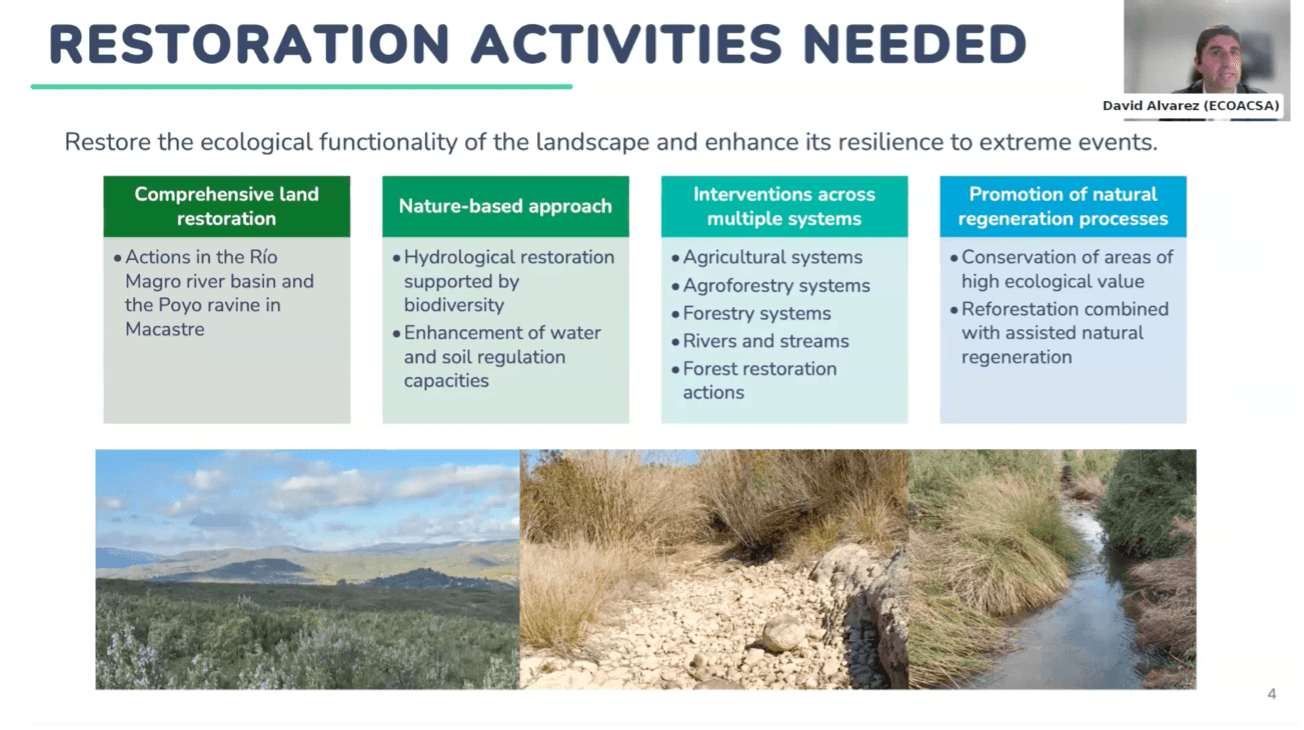
In this context, David Álvarez, Executive Director of Ecoacsa Reserva de Biodiversidad, presented the project for the restoration and conservation of hydrological basins and their surrounding vegetation that Ecoacsa is developing together with Aper Ambient Ambient in Macastre (Valencian Community), during the webinar “Biodiversity Credits in Practice: First lessons learned from piloting biodiversity credits in European wetlands”, organised by Eurosite together with bloomlabs, aeco, Sylva, NABU and the European Landowners’ Organization within the framework of the LIFE BiodivCrEW project.
The session brought together European specialists in nature finance, biodiversity markets and ecosystem restoration, including Martin Pilstjärna, co-founder of the Nordic Nature Market Initiative (NNMI) and moderator of the event; Simas Gradeckas, co-founder and CEO of bloomlabs, who presented a comparative analysis of different biodiversity credit schemes and the challenges associated with impact standardisation and measurement; Inga Ķuze, conservation finance specialist at Eurosite, who shared lessons learned from identifying and assessing pilot projects in European wetlands; Marc Maleika, founder of Sylva, who focused on the financial and scalability challenges associated with these initiatives; and David Álvarez, who presented the hydrological restoration case developed in Macastre as an example of the practical application of nature-based financing mechanisms.
The initiative is being developed across an area of approximately 1,600 hectares (around 1,400 hectares with restoration potential) in the surroundings of Macastre and combines combines hydrological restoration actions, natural regeneration, strategic reforestation and the recovery of connected habitats, with the aim of improving water regulation, reducing erosion processes and strengthening landscape resilience to extreme climate events.
The project also incorporates a comprehensive approach to the assessment and monitoring of ecosystem services and ecological benefits, exploring the potential of biodiversity credits and other nature-based financing mechanisms to channel investment towards long-term restoration projects.
Participation in this European exchange forum highlighted the importance of continuing to develop tools capable of connecting ecological restoration, scientific evidence and innovative financing mechanisms aimed at conserving and restoring ecosystems.
This line of work is also linked to Ecoacsa’s participation in the European working group Nature Finance and Private Land Conservation (NFPLC), ), promoted by Eurosite, a platform focused on knowledge exchange and the development of innovative approaches related to nature finance, private conservation and biodiversity credits.