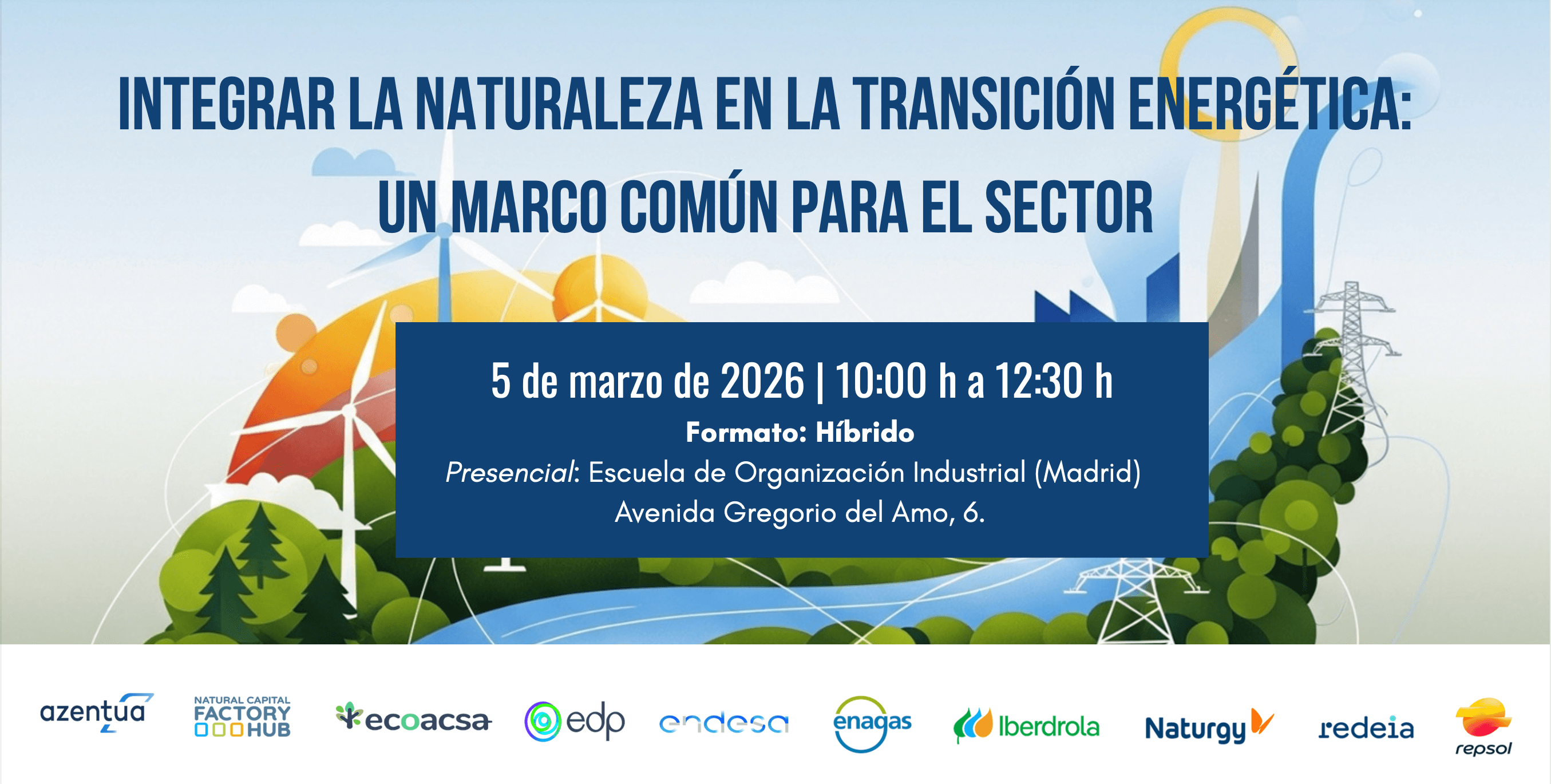
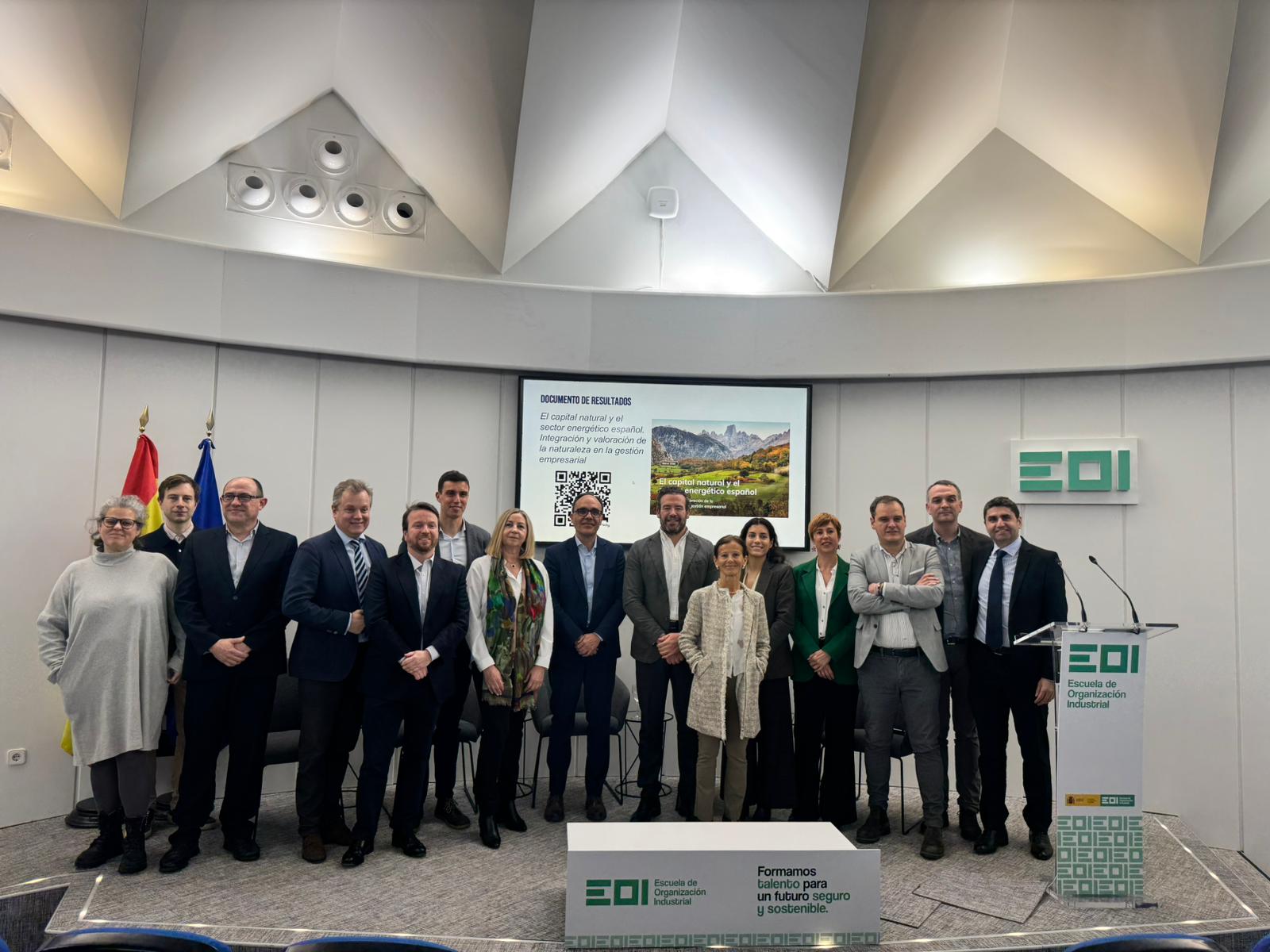
Seven of the leading companies in the Spanish energy sector —EDP España, Endesa, Enagás, Iberdrola, Naturgy, Redeia y Repsol— have been working jointly since 2018 to advance the integration of nature into corporate management and strategic decision-making across the sector.
As a result of this process, the companies present the report "Natural Capital and the Spanish Energy Sector: Integrating and Valuing Nature in Corporate Management”, which consolidates a practical and shared approach to identifying and prioritising the sector’s most relevant impacts and dependencies on nature, from a natural capital perspective and with a clear business-oriented focus.
The report provides a collaborative framework that enhances efficiency, coherence and comparability across the Spanish energy sector. It helps to better understand how energy activities interact with biodiversity and ecosystem services, and how these interactions may translate into business-relevant dependencies, impacts, risks and opportunities, thereby supporting alignment with the main reporting and disclosure frameworks. dependencies, impacts, risks and opportunities, thereby supporting alignment with the main reporting and disclosure frameworks.
Drawing on the LEAP approach (Locate, Evaluate, Assess, Prepare) developed by the Taskforce on Nature-related Financial Disclosures (TNFD), the work focuses on the Locate and Evaluatestages, considered critical to building a robust and consistent foundation that can subsequently support the identification and management of nature-related risks and opportunities. The analysis explicitly incorporates the territorial dimension, recognising that the materiality of impacts and dependencies is closely linked to the environmental sensitivity of the areas where energy infrastructures operate. dimensión territorial, reconociendo que la materialidad de los impactos y dependencias está estrechamente vinculada a la sensibilidad ambiental de los entornos en los que operan las instalaciones energéticas.
Among the report’s main conclusions are:
- the agreed identification of activities, sub-activities, technologies and lifecycle stages with the greatest potential to interact with nature;
- the development of common technical criteria to prioritise sector-relevant impacts and dependencies;
- a shared methodological approach to characterising environmentally sensitive locations;;
- and improved traceability and comparability in companies’ internal assessments.
The exercise does not replace company-specific corporate analyses,but rather acts as an enabling framework, laying the foundations for more informed decision-making through the development of shared technical and territorial criteria that progressively integrate nature into corporate strategic management. This framework allows companies to advance with greater efficiency, technical rigour and internal coherence while respecting their specific operational and regulatory contexts. It also transparently acknowledges key methodological limitations, along with and identifies areas for improvement and future development, providing companies with a realistic and progressive roadmap to further integrate nature into their analysis, management and reporting processes.
In a context marked by the evolution of the European regulatory framework —with the Corporate Sustainability Reporting Directive (CSRD by its English acronym) and the European Sustainability Reporting Standards (ESRS), particularly ESRS E4 on biodiversity and ecosystems— the work of the Natural Capital and Energy Working Group (GTCNE) highlights the complementarity between regulatory and voluntary frameworks. The sectoral approach developed contributes to aligning internal assessment processes with disclosure requirements, supporting the application of the double materiality principle and strengthening the quality of sustainability information.
Beyond the technical outcomes, the process highlights business collaboration as a driver of transformation and collective learning, helping to reduce methodological ambiguity, build a shared technical language and establish solid foundations for the progressive integration of nature into corporate decision-making. This demonstrates how knowledge sharing and consensus-building can accelerate the strategic integration of nature within the business community.
This work of the Natural Capital and Energy Working Group, lead by the Natural Capital Factory, the Spanish hub of the Capitals Coalition, with technical support from the consultancies Azentúa and Ecoacsa, reinforces the role of the energy sector as a key actor in the transition towards a more resilient, competitive and ecologically compatible economy..