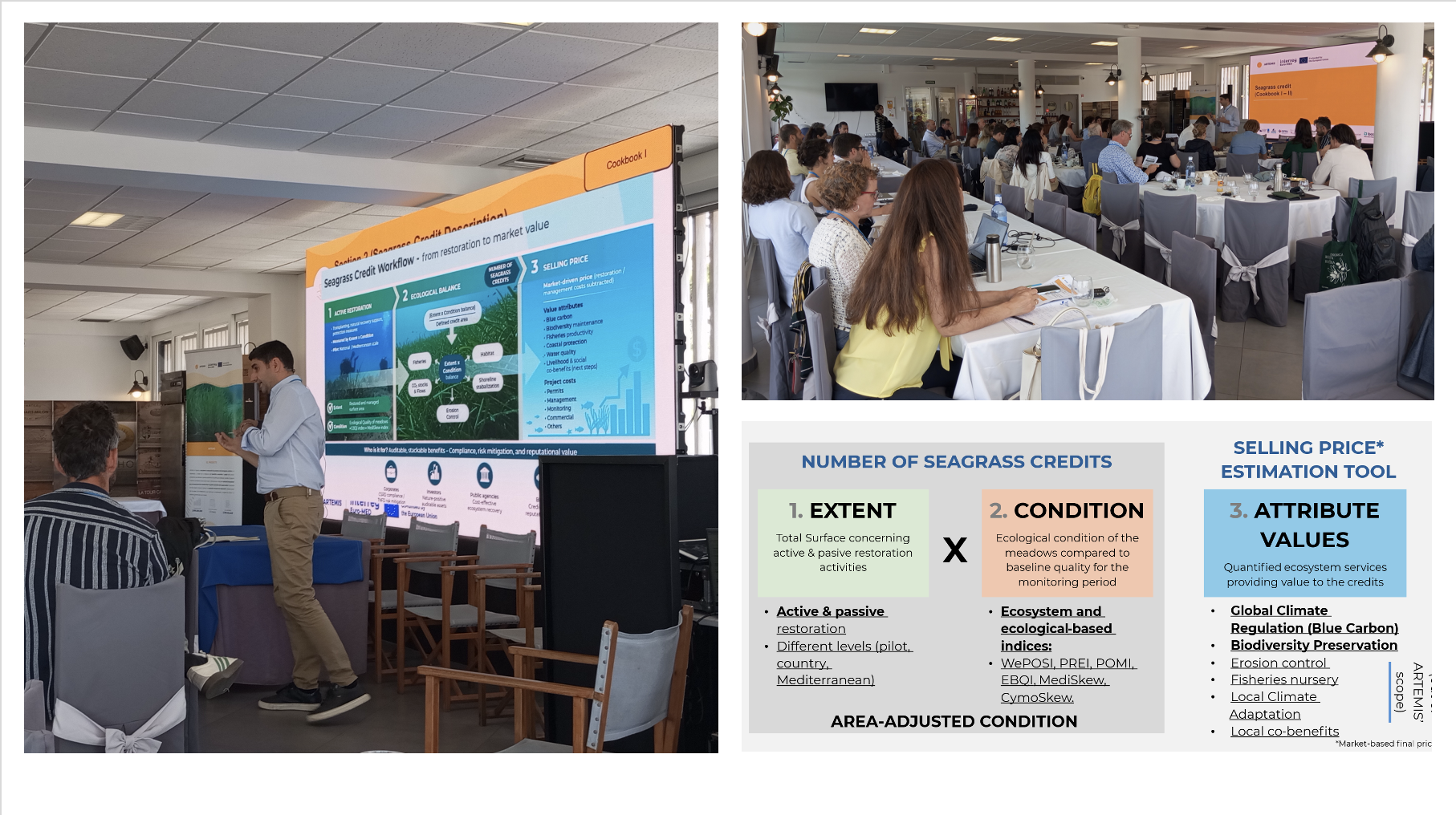
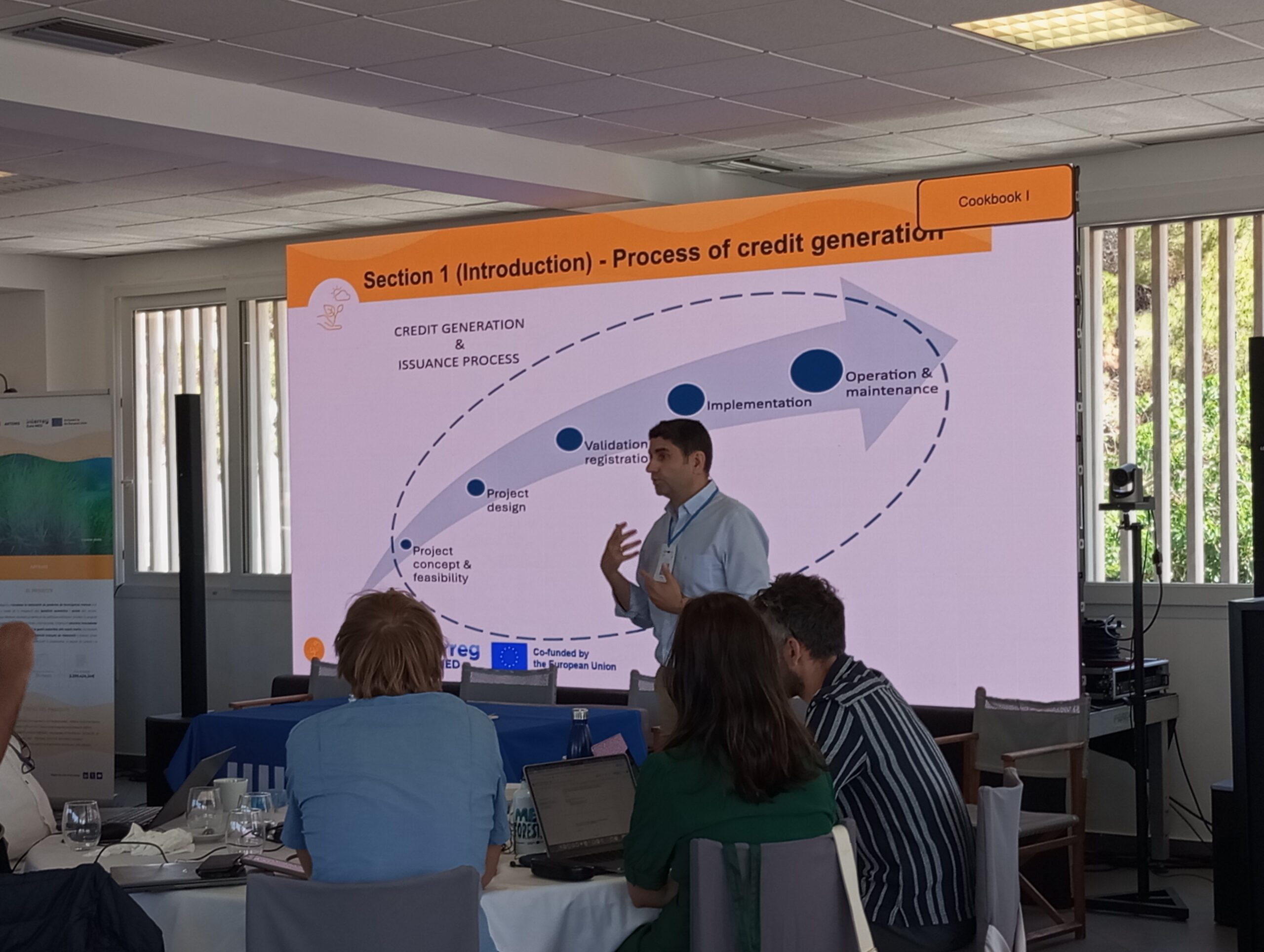
During the Final Conference of the Interreg Euro-MED ARTEMIS, David Álvarez García, executive director of Ecoacsa, presented the ARTEMIS Cookbook for Seagrass Credits, a practical framework designed to support the development of nature credit systems linked to the restoration and conservation of Mediterranean seagrass meadows.
The Cookbook represents one of the key outcomes of the ARTEMIS project. Desarrollado a través de un collaborative process process involving project partners and external experts, it brings together scientific knowledge, natural capital accounting principles, policy developments and market requirements into a single framework aimed at supporting future investment in marine ecosystem restoration.
Mediterranean seagrass meadows provide essential ecosystem services, including biodiversity conservation, carbon sequestration, coastal protection and support for fisheries. However, despite their ecological importance, restoration efforts often face significant financing challenges. The ARTEMIS Cookbook ARTEMIS Cookbook seeks to address this gap by providing a structured methodology to quantify ecological outcomes and translate them into potential nature credit mechanisms capable of attracting private.
The framework combines ecosystem extent and condition assessments with internationally recognised Natural Capital Accounting approaches, creating a robust basis for measuring restoration outcomes and ensuring transparency, credibility and comparability. It also incorporates key concepts required by emerging nature markets, including additionality, permanence, leakage, baseline definition, monitoring and verification. additionality, permanence, leakageleakagebaseline definition, monitoring and verification.
Beyond the technical aspects of credit generation, the Cookbook explores the the legal, commercial and financial conditions needed to support future market development. This includes guidance on project design, risk assessment, business planning, pricing considerations and governance arrangements, helping project developers and investors better understand the opportunities and challenges associated with marine nature credits.
A key message highlighted during the presentation was that successful nature credit systems nature credit systems must balance scientific robustness with market practicality. While ecological outcomes remain at the core of the approach, future financing mechanisms must also respond to investor expectations, regulatory developments and corporate demand for credible nature-positive investments.
The ARTEMIS Cookbook is intended as a first step towards the development of high-integrity marine nature credit systems and contributes to ongoing European discussions on biodiversity credits and nature markets. It also provides valuable insights for future initiatives seeking to mobilise private finance for ecosystem restoration across the Mediterranean region.
As discussions continue at European level around the future Nature Credits RoadmapNature Credits Roadmap), the experience gained through ARTEMIS demonstrates how science, policy and finance can work together to unlock new opportunities for scaling up marine ecosystem restoration. More about Interreg Euro-MED ARTEMIS: https://artemis.interreg-euro-med.eu/
Más información sobre Interreg Euro-MED ARTEMIS: https://artemis.interreg-euro-med.eu/