Coinciding with the week of the World Oceans Day celebrations, it is timely to highlight the fundamental role that healthy marine ecosystems play in biodiversity conservation, climate regulation, and human well-being.. However, restoring these ecosystems at scale requires not only scientific knowledge, but also robust methodological frameworks that help policymakers, businesses, and investors understand, measure, and communicate the value of nature.
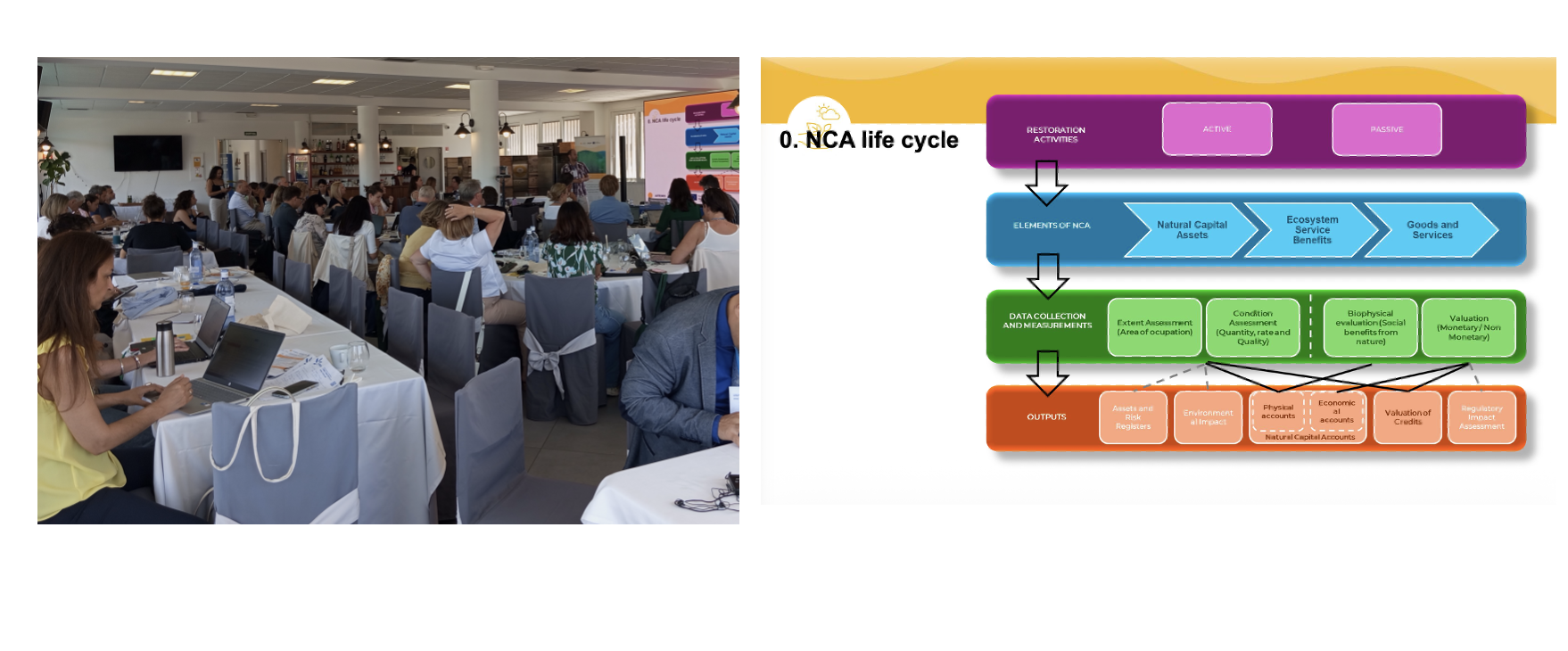
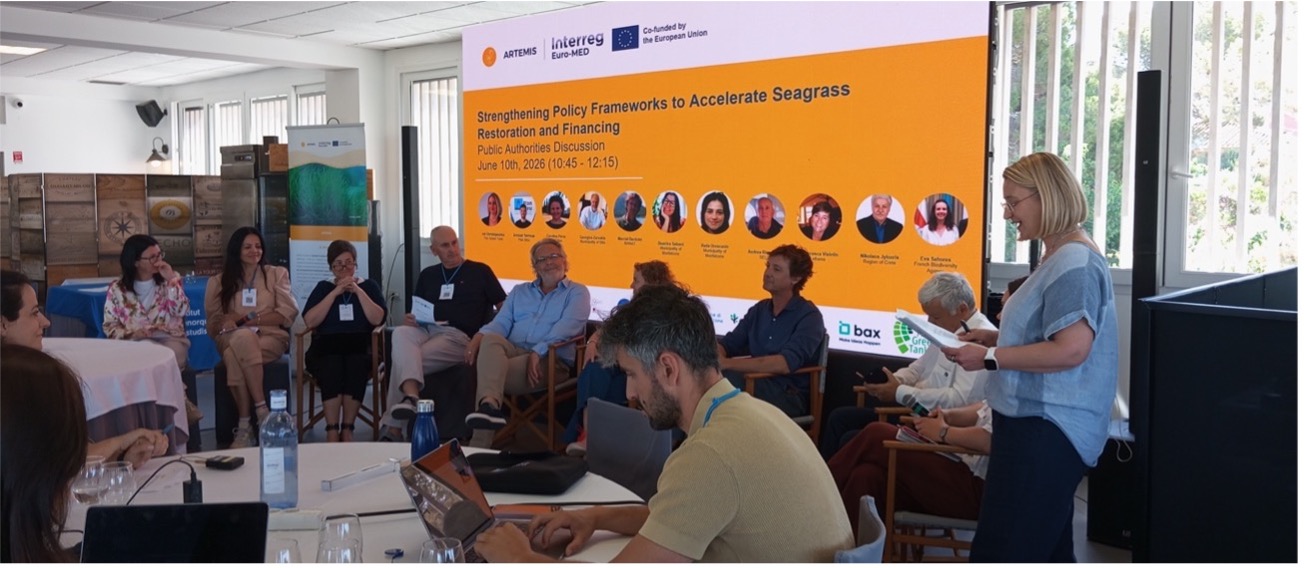
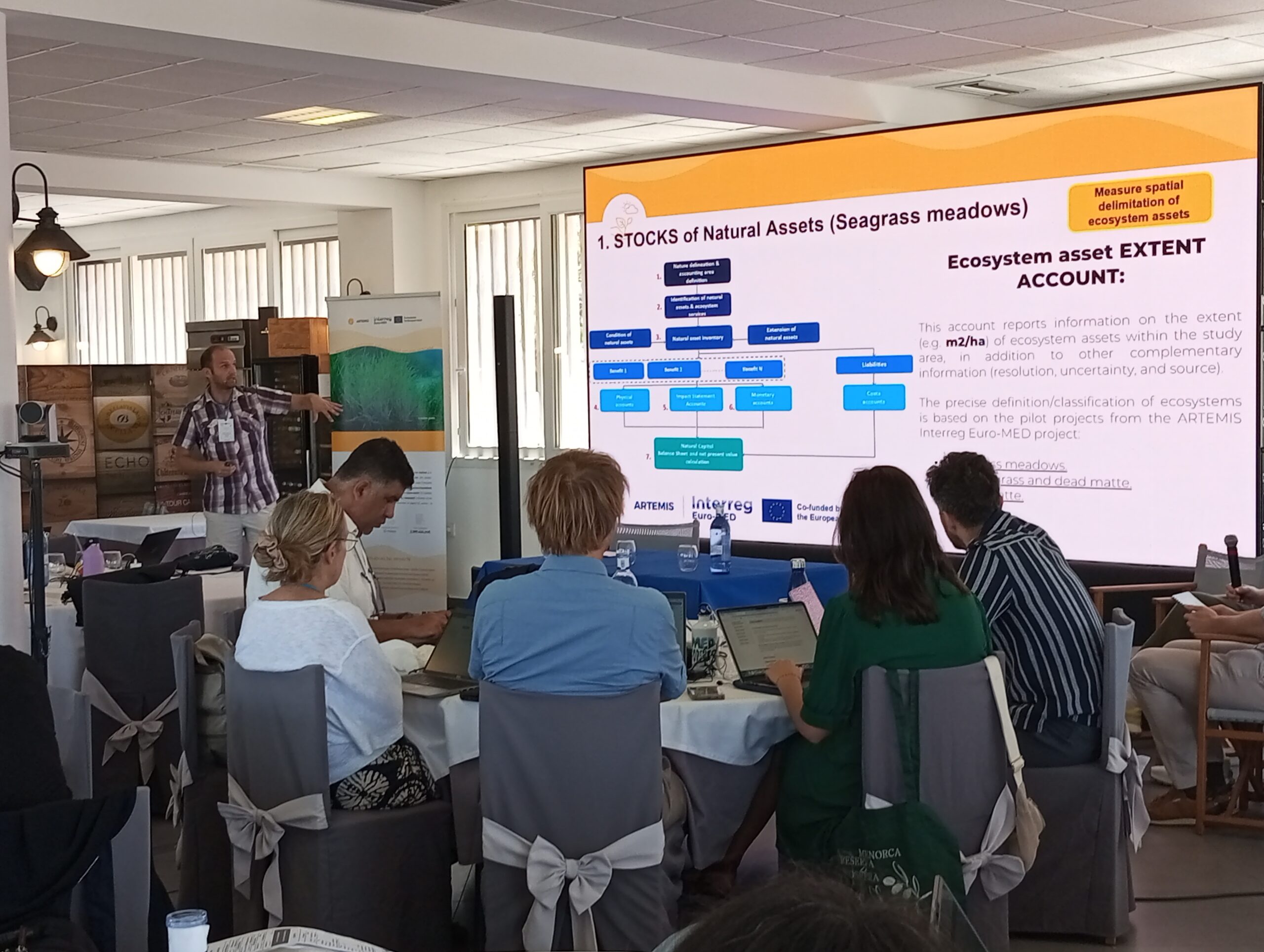
During the Final Conference of the Interreg Euro-MED project, our colleague Enrique Álvarez, Natural Capital and Biodiversity Senior Consultant at Ecoacsa, presented the application of Natural Capital Accounting (NCA) across the four seagrass restoration pilots developed under ARTEMIS in Greece (Crete), Italy (Monfalcone and Sardinia), and Spain (Menorca). The presentation demonstrated how the outcomes of ecological restoration activities can be translated into meaningful information to support management, investment, and decision-making processes.
The presentation highlighted the need to move beyond traditional ecological monitoring and equip decision-makers with a common framework capable of linking ecosystem condition, the benefits ecosystems provide (ecosystem services), and the socio-economic value they generate. In this context, Natural Capital Accounting offers a structured approach to measuring, monitoring, and valuing ecosystem assets through internationally recognised standards.
The methodology developed within ARTEMIS integrates information on ecosystem extent, ecological condition, and the biophysical flows of ecosystem services related to biodiversity preservation and global climate regulation, together with their economic valuation. This approach enables restoration outcomes to be transformed into decision-relevant information that can guide management actions, investment strategies, and future nature finance mechanisms.
One of the key messages of the presentation was that biodiversity conservation represents a fundamental component of the value generated by seagrass restoration. While blue carbon remains an important ecosystem service, assessments based solely on carbon metrics may underestimate the broader benefits provided by Mediterranean seagrass ecosystems.
The work presented also demonstrated how Natural Capital Accounting can contribute to:
- Creating a common language that helps translate ecological restoration outcomes into information that can support policy, management and investment decisions. The approach is aligned with the United Nations System of Environmental-Economic Accounting Ecosystem Accounting (SEEA EA), helping create a common language between ecology, economics and decision-making.
- Assessing both biodiversity preservation and blue carbon benefits within a single accounting framework, providing a more comprehensive picture of the value generated by restoration activities.
- Generating evidence that can support the development of future nature finance mechanisms, including biodiversity and seagrass credit systemsseagrass credits), by providing transparent, scientifically robust and internationally comparable information.
- Demonstrating that biodiversity preservation represents a significant component of the value generated by Mediterranean seagrass restoration, highlighting the importance of looking beyond carbon alone when assessing restoration outcomes.
More information about the project is available at: https://artemis.interreg-euro-med.eu/